
Custom themes
Fast, accessible themes built around your products, not a marketplace template with ten apps patched on top.
Shopify is the right platform for most direct-to-consumer brands, and the difference between stores is in the details: speed, the product page, the checkout and the back office behind it. We build custom themes, apps and integrations — and tell you when Shopify is not the right answer.
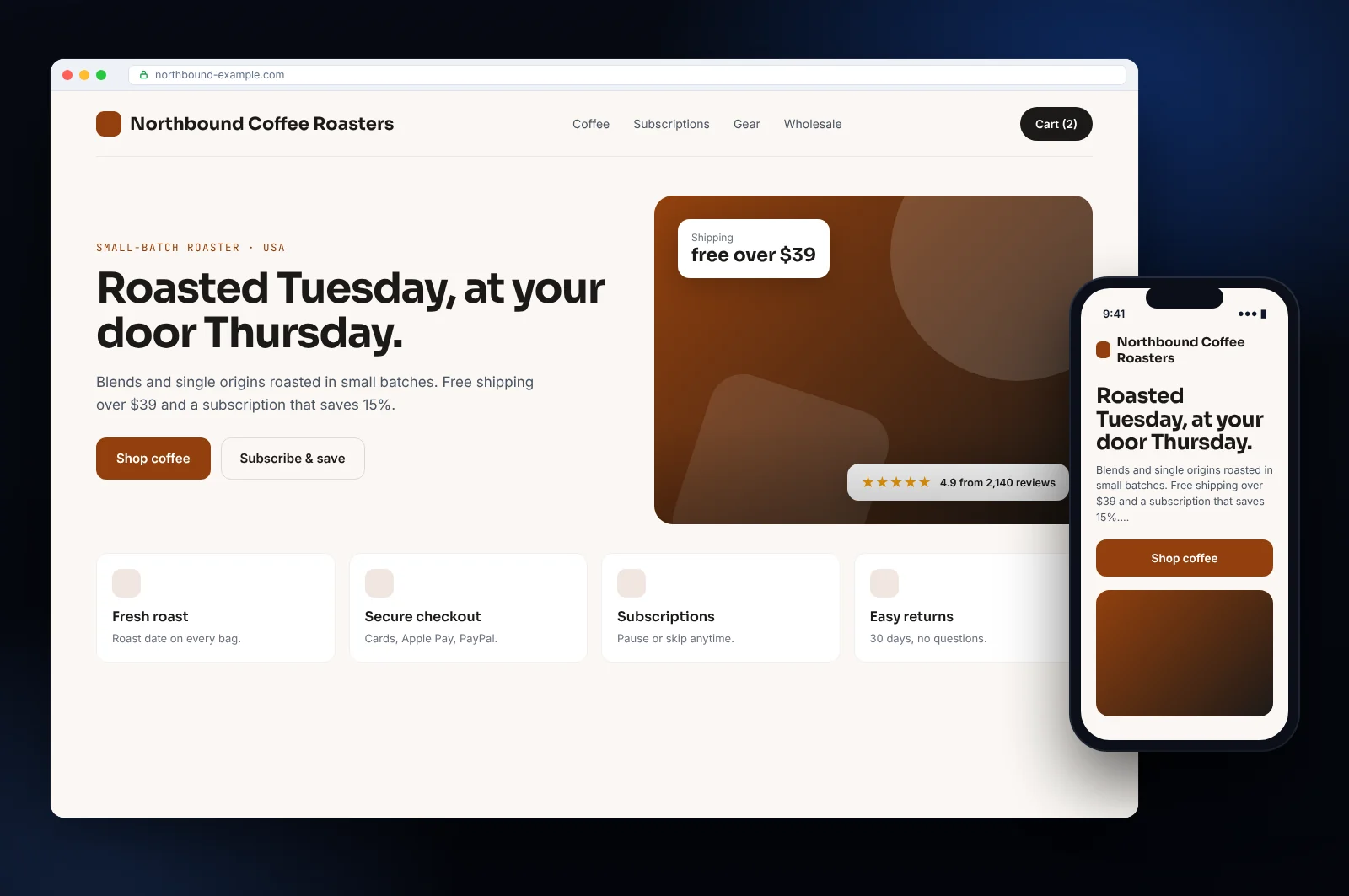
Fast, accessible themes built around your products, not a marketplace template with ten apps patched on top.
Real content, variants that make sense, reviews, bundles and subscriptions — the page where the sale is decided.
3PL and warehouse, ERP and accounting, Klaviyo, marketplaces and your POS, syncing stock and orders automatically.
Wholesale pricing, net terms, minimums and reorders for retail buyers, on Shopify's B2B features or a custom portal.
When an app store app does not fit: private apps for your specific logic, without monthly fees per feature.
From WooCommerce, Magento or BigCommerce, with redirects planned so your rankings survive the move.
The typical Shopify store we audit runs a dozen apps, each adding scripts to every page. Speed drops, conversion drops, and the monthly app bill climbs. Rebuilding the theme with the essential features built in is often the highest-return project a brand can do.
SEO on Shopify comes down to structure: collection pages with real content, product pages with unique descriptions and structured data, clean URLs and no duplicate filtered pages in the index.
Sales tax, shipping rules and accessibility are configured properly from the start, not discovered after launch.
Complex B2B pricing, product configurators with real engineering rules, unusual fulfillment or marketplace models can outgrow Shopify. In those cases we build custom e-commerce and connect it to the same back office.
We will tell you which on the first call, with reasons. Most brands under eight figures in revenue are best served by a well-built Shopify store.
Projects get a fixed quote; you own the store, the theme code and all accounts.
We work remotely with shopify across the country, with calls in your morning and the build happening while you are offline. Local market notes, city by city:
Northeast: New York · Boston · Philadelphia · Washington, DC
Southeast: Miami · Atlanta · Orlando · Tampa · Charlotte · Raleigh · Nashville
Midwest: Chicago · Minneapolis · Detroit · Columbus · Kansas City
Texas and the Southwest: Houston · Dallas · Austin · San Antonio · Phoenix · Las Vegas
West Coast and Mountain: Los Angeles · San Francisco · San Jose · San Diego · Seattle · Portland · Denver · Salt Lake City
Yes, including checkout extensibility, B2B features and Shopify Functions for custom discounts and logic.
Usually, yes. We audit apps and theme code, remove what is not needed and rebuild the essentials natively.
Yes, if it is planned: URL inventory, 301 redirects, content preserved, and checks after launch.
A company website costs €350 one-off, plus €150 if you want the initial optimization for Google and Bing, or €24.80 a month with hosting, domain, maintenance and content changes included on a 24-month minimum term. Web apps start at €50 a month or €750 one-off; custom business software starts at €1,500. Larger projects get a fixed quote after a free analysis.
Yes. On the one-off option the domain, hosting, content and source code are registered in your company's name from go-live, and the code lives in your repository. There is no license tied to us and no lock-in.
Our invoices to US businesses are issued without Italian VAT, because business services sold outside the EU are not subject to it, and as a foreign service provider we do not add US sales tax. Your accountant will confirm how to record it on your side — it is a standard cross-border arrangement.
Thirty minutes on a video call, free and with no sales deck: we tell you what you actually need, what it costs and how long it takes to go live. If we are not the right fit, we tell you that too.
Book a free call