
Uninsulated buildings
Houses and apartment buildings built before the 1990s, with uninsulated walls: the gain is greatest.
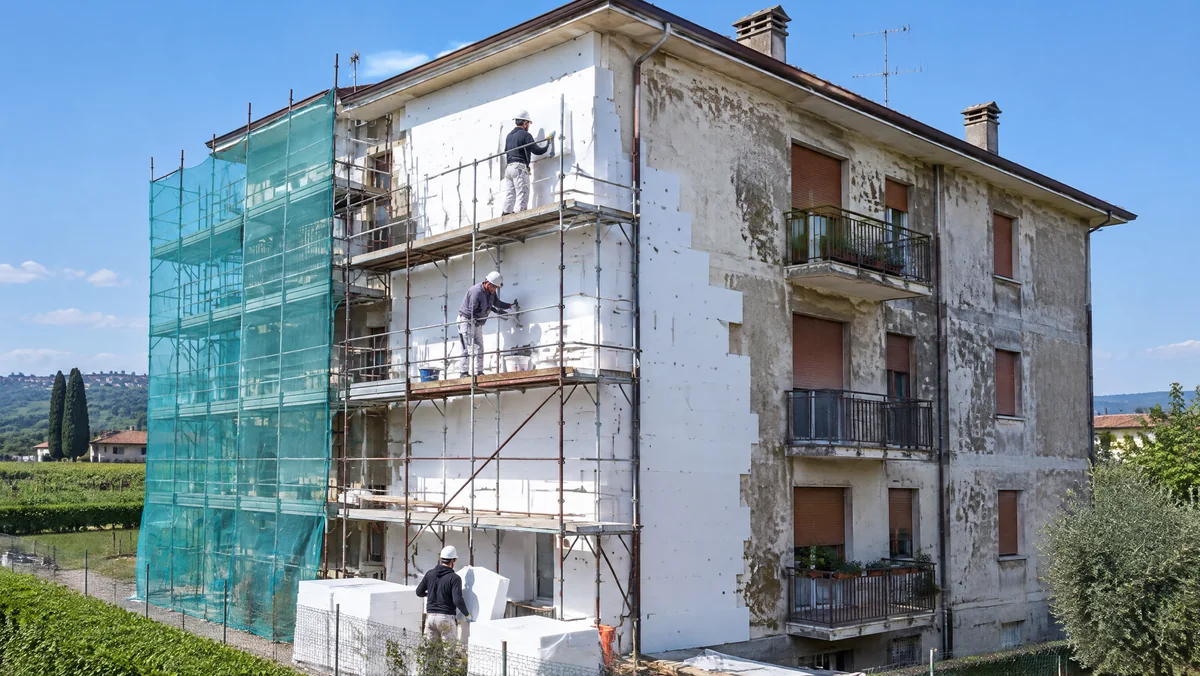
External insulation is one of the most effective ways to cut consumption, but it is not always the right choice. Here is how to tell whether it pays off on your building.
Houses and apartment buildings built before the 1990s, with uninsulated walls: the gain is greatest.
If the facade needs repair or repainting anyway, adding insulation costs relatively less.
Insulation raises interior wall temperatures and reduces condensation.
North-facing or very sunny walls: better comfort in winter and summer.
Insulating first allows a smaller, more efficient system.
In 2026 the Italian ecobonus is 50% for the main residence and 36% for other properties.
In listed historic centres the facade often cannot be changed: you can insulate from inside with drywall linings. Where premium cladding or strong heat protection is needed, a ventilated facade is a more expensive but very durable alternative.
The result depends on installation: corners, sills, balconies and window junctions are the critical points. See how we work on the external wall insulation page.
Yes, it reduces heat entering through the walls; with dense insulants such as wood fibre summer comfort improves further.
Yes, for shared facades a resolution of the owners’ meeting is required.
Address and year of construction: we come to see and tell you.